Skip to content

Author: Spocko

Rubio: It’s the media’s fault we have to take billionaire’s money @spockosbrain

Rubio: It’s the media’s fault we have to take billionaire’s money 


by Spocko

All Things Considered did a story yesterday about a Koch event attended by GOP presidential candidates. It’s really stunning to listen to some of their quotes.

Here is the link. Here are two audio bits I highlighted in the transcript below:

From the story:

“The biggest contributor so far is hedge fund magnate Robert Mercer. He sent $11 million to a super PAC backing Ted Cruz. Florida Sen. Marco Rubio told the Koch network the candidates really have no choice about raising money.”

(SOUNDBITE OF ARCHIVED RECORDING at 1:48)

MARCO RUBIO: As long as newspapers and television stations keep charging people to speak out on politics, we’re going to have to keep raising money to pay for it.

Great narrative flip Marco! You are the real victim here. You had no choice but to accept the trucks of cash dumped on your doors! And besides, why should you have to pay for your “free speech?”  (Hey, does this mean he wants the fairness doctrine back? )

“And Carly Fiorina, a former CEO of Hewlett-Packard, said the media isn’t nearly as critical of liberal donors and labor unions.”

(SOUNDBITE OF ARCHIVED RECORDING at 2:01)

CARLY FIORINA: The point is the media doesn’t like one kind of money, but is OK with another kind of money. I think…
(APPLAUSE)
FIORINA: I think everybody ought to play by the same rules.

Notice how smoothly they shift the blame to the media. And the media is just going to sit there and take it.

Yes, the liberal media is to blame. She’s saying, “Why is the media always picking on rich conservatives? Why not pick on rich liberals or those damn Unions?! Let’s have some false equivalency here media!”

Why would anyone in the media ever want to stop big money in political campaigns? Why would they piss off the Kochs or other billionaires who might be buying ads? What’s in it for them, except loss of revenue? And really, where is the harm in letting it continue?

“It is difficult to get a man to understand something, when his salary depends on his not understanding it.”
Upton Sinclair, I, Candidate for Governor: And How I Got Licked

TV media are not going to question any money coming into political campaigns. As long as the money keeps coming, they won’t even question the process too hard.

The billionaires are telling the media,

“Shut up and take my money.” 

And they do.

Even on the public media side they let someone else question the money and then put in a nice balancing quote from Jeb “Ice In the Belly” Bush.

JEB BUSH: “Money helps. I’m playing by the rules of the game, the way it was laid out. And if people don’t like it, that’s just tough luck.”

Fund raising has become so easy candidates would be stupid NOT to do it, if only for the future benefits. This is what we are seeing now.

The media want to maximize revenue during this post Citizen United time. They don’t want to rock any boats. But they will be happy to cover the people who do, and then provide “balance” to distance themselves from them in the eyes of advertisers.

This, my friends, is an opportunity.

This Thursday we will see just how acceptable extreme opinions are.

Will we see the crowd cheering for cops defending themselves from cigarette smoking women and agreeing about those raping Mexicans? Trump will be providing lots of great extreme opinions. Will others use his views to distance themselves from Trump’s remarks or try to top him?

If I put on my activist or real journalist hat on, I would figure out what questions aren’t getting asked and then figure out how to insert myself in the process. 
The MSM would tut tut any outsiders asking tough questions, but secretly they love the fact that they didn’t have to ask the hard questions because it might limit their future access–or ad revenue. 
If I was really smart, which clearly I’m not, I’d also figure out a way to monetize doing the MSM’s old job for them. Their current job is covering the horse race, while keeping the ad revenues coming. Yes they can “cover the controversy” but can’t ever be the source of any of it.  
Someone might have already figured all of this out, we’ll see soon. I’ve been told that my tragic flaw is an inability to monetize doing the right thing. I guess that is why I’ll never be a billionaire.

RIP Rowdy Roddy Piper. His film “They Live” was a Documentary @spockosbrain

RIP Rowdy Roddy Piper. His film, “They Live” was a Documentary 

by  Spocko

‘Rowdy’ Roddy Piper, WWE legend, dead at 61
    – CBCNews Saskatchewan 

One of my favorite films in the 80’s was “They Live.” Not just because of the science fiction aspect of it, but because of the biting satire.

On the surface it’s a standard “Aliens take over Earth” story, but underneath that it showed how some in the media and government really see Americans and what they want us to do.

When our heroes put on special glasses they could see the messages that were embedded in our media, all in black and white. (Video link)

Frank: What do these things want?
Gilbert: They’re free-enterprisers. The earth is just another developing planet. Their third world.
The main character, Piper, comes to town looking for work. He is directed to a camp of other men and women looking for work. His interview:
Female Interviewer: Last place of employment?
Nada: Denver, Colorado. I worked there for ten years and things just seemed to dry up. They lost fourteen banks in one week. So, well…
Female Interviewer: There’s nothing available for you right now.

This movie came out in 1988, at the end of the Reagan years. Homelessness and yuppies existed side by side. It was an awkward juxtaposition for people with empathy.

During that time many people figured, if you can’t beat ’em, join ’em! Even if it meant having no empathy for others. Look out for number One, especially if he looks like you!  Get that BMW and Rolex! If people have a problem getting work it was their fault, not the power structure or the system.

What kind of people would act this way? Certainly not good Christians given what that guy Jesus said in the parables in the New Testament. It was hard to believe that decent humans could act this way. Therefore they must not be themselves. So that is what the filmmakers did, made greedy, selfish people into actual ugly aliens.

Yes it’s a simplistic metaphor, but the movie creator then went beyond it to include humans who weren’t aliens, but who believed in the alien “values.”  Let’s call them “aspirational aliens.” 

Drifter: What’s wrong with having it good for a change? Now they’re gonna let us have it good if we just help ’em. They’re gonna leave us alone, let us make some money. You can have a little taste of that good life too. Now, I know you want it. Hell, everybody does.
Frank: You’d do it to your own kind.
Drifter: What’s the threat? We all sell out every day, might as well be on the winning team.
Join the winning team! Why associate with the poor, even if they are like you. Don’t be a loser!  Outsource the jobs at your company and you get a cut of the profits. Get that juicy government contract, then bitch about welfare for, “those people.” Winner!

Frank: The steel mills were laying people off left and right. They finally went under. We gave the steel companies a break when they needed it. You know what they gave themselves? Raises.

One of the themes of the movie was how the aliens in the media helped the aliens in the government. The media amplified the messages of consuming goods and obeying authority. Meanwhile, the aliens literally sent our wealth away from Earth. 

Some of the people who Piper wanted to join him in the struggle against the aliens had to be forced to see the truth. (This involved a classic alley fight scene with Piper and Keith David video link
When Keith David finally sees what is happening, the scope of the alien’s power and control is stunning.  
Together they do the best they can to fight the aliens and their human collaborators. They become hunted criminals in the process.  Who can they turn to for help? Who are their allies? Not the media, they had profits to make.
The media attacked the people handing out the glasses that let everyone see the truth for themselves. It’s easier to write the truth tellers off as nuts. Fortunately, some in the media were still human, and helped.
The heroes’ crime was trying to open people’s eyes to what was hiding behind media and government fronts.  Does any of this sound familiar?  Have you heard a story like this lately?
Today the actor Rowdy Roddy Piper is dead, but “they” live.

We have always had greedy humans selling out fellow humans for profit, demanding everyone submit to their authority and obey, no questions asked. But we need to keep fighting them in our life and within our fiction.

Let’s listen to Piper give the inspiring words of screenplay author John Carpenter 


It’s 2015 America, and I’m all out of bubblegum.

-Spocko

Why I care when people with ‘something to hide’ are hacked @spockosbrain

Why I care when people with ‘something to hide’ are hacked


by Spocko

privacy
“Privacy” by Melanie Feuerer used under a Creative Commons Attribution 2.0 United States License

It’s all about the Privacy. 

Do some people deserve it less than others?  Who decides?

Online Cheating Site AshleyMadison Hacked
    — Brian Krebs, @briankrebs Krebs on Security July 19, 2015 

When people who are supposed to protect someone’s privacy fail, what should their responsibility be following the failure?  How do you make “someone whole,”  as they say in the insurance biz, following a privacy breach?

Hacks of OPM databases compromised 22.1 million people, federal authorities say     — Ellen Nakashima, @nakashimae, The Washington Post, July 9, 2015

What are the valid reasons someone’s privacy is violated? National Security? Public safety? Potential violence? Donating to the wrong cause?  Who gets permission? Who oversees this?

“I don’t care if the government listens to me, I don’t have anything to hide. If you don’t have anything to hide, what are you worried about?”

           — US citizen comment I read in response to Snowden revelations

Are there standards and regulations that organizations should meet? Who enforces them? What are the penalties if they don’t?

If they don’t follow the standards should there be additional sanctions? Who decides?

“JPMorgan Chase Hacking Affects 76 Million Households”
Announcement of breach delayed months, only revealed due to SEC filing–Jessica Silver-Greenberg, Matthew Goldstein and Nicole Perlroth

What are the requirements for reporting to people when private information is revealed? Who sets these requirements and who enforces them?  Do the agencies suffer from regulatory capture? Do they have a budget or was it slashed so “the market” can decide?

Yesterday on Virtually Speaking Jay Ackroyd  and I talked about cybersecurity, cyberterrorism and end-to-end encryption. I touched on some of these questions, but I think the Ashley Madison breach might get more people to pay attention to this issue. Here are for two reasons why, plus an attitude to notice.

1) Salacious! Schadenfreude!
2) Famous people having sex.

Moral superiority, (“It serves them right, those cheating bastards!”)

The news media will cover all the juicy details because it’s fun, but, like some 1st Amendment fights, privacy protecting should extend to unsavory characters,  such as lying cheaters, who DO have something to hide.

There are criteria on privacy that need be discussed.  It’s easier to say some people don’t deserve it, especially when it’s an activity you don’t approve of. But think about what activities that happen between consenting adults in the bedroom that recently became approved of in many states.

My favorite response to the US Citizen comment is from Glenn Greenwald following the Snowden revelations:

Jay and I discussed the massive Office of Personal Management breach quite a bit but not much about privacy. Part of that was because of a question Jay poised:

 ‘What will it take for people to take this computer security and cyberterrorism seriously?” 

My first response was, “An effective attack on the power grid by a non-state actor in which important people die.”

I quoted from Shane Harris’ book @War, (page 52-53) What most people don’t know is that our power grid has been hit twice (that we know of) in 2003 and 2008. But because the entity that appear to be behind it was a State Actor (China) the cases were covered up.

If people die, and those attacks get pointed to ISIS as the entity behind it, that would give certain groups a “Cyber 9/11!” power that they want. But it has to be pointed at a group or individuals that aren’t a huge trading partner.

Today I realized that my answer was incomplete. There needs to be multiple attacks on the right kind of infrastructures, in the right regions, and from the right sources.  So for example, power grids, in media dense areas. There needs to be TV visuals. Innocent and powerful people or children need to be hurt. The source needs to be an individual or an entity without state backing

Also, the reasons need to be the right ones. As we might be seeing in the Ashly Madison case WHY someone starts an attack is important. It’s NOT always about the money. Sometimes it’s revenge. Other times scores to settle. “Senseless” reasons,  like the kind that does not pay off in cash are harder for the media to understand.

It’s all about the Leverage.


The other big issue I mention on the show is leverage.  If you are an entity that has personal information on government employees and their relatives from one hack and you also have information on their financial status from another hack, together you have a perfect tool kit for a Spymaster.

Spymasters don’t sell their info on the open market. They save it. And use it when they need something bigger to happen, like a “Trade” deal.

Maybe I’m like Richard Clarke running around with my hair on fire, telling people to do something on this issue and they can’t see the fire.

Vulcans love to be right on things and have nobody listen to them. Just like dirty hippies loved to be right about the war in Iraq and have nobody listen to them then or now.

As Jay pointed out there ARE things that can be done, both personally, corporately and federally.  But the policies of  “small government” and weak regulation that conservatives always push is harming our economy and jeopardizing people’s lives.

But I guess they need to wait until a cyber attack or computer breach leads to physical deaths to do some deeper investigations into failures and make changes to secure our systems and people’s private data.

I don’t want to assume that mostly conservatives are on the Ashley Madison list, it’s none of my business if they aren’t breaking the law with consenting adults. But if they dodge a bullet this time, maybe they will consider the importance of privacy for everyone.  And do it soon before more lives are ruined, after all, as the people at Ashley Madison say, life is short.

Fighting Evil Corp. There’s an App For That! @spockosbrain

Fighting Evil Corp. There’s an App For That! 

by Spocko

I’m a crappy chess player. This became clear to me when my 8 year-old nephew beat me while explaining, “The horsey piece can only move in an “L” way Uncle Spocko!”

One of the things they say you learn from chess is thinking several moves ahead, anticipating your opponent’s responses and acting accordingly. I learned this skill from life experience.

Right now I’m watching Mr. Robot. They are looking at the personal reasons people fight big institutions, as well as the human cost of those fights. That’s the part people don’t see, and it can be exhausting.

Robot Fight

When I went about the process of defunding RW talk radio, I knew I needed to anticipate how they would respond to my actions.  Then, how they would respond to my responses.

When I started alerting advertisers to the violent rhetoric, sexism and bigotry coming from the RW radio hosts I knew the radio station would use multiple excuses to keep the advertisers. First they discredited me, and then the information. Next, threats of arrest from law enforcement agencies, then hints of exposure of my identity. Finally legal threats, which they carried out. They threw around phrases like libel, tortuous interference with contract and copyright violation before they settled on a bogus copyright violation action.

I had read some books on the topics to prepare, but the smartest move I made was talking to a lawyer at the Electronic Frontier  Foundation. Following that conversation, I made sure what I wrote and posted on my blog would meet the four factors of Fair Use.

Even though I met both the spirit and the letter of the law, ABC/Disney lawyers still sent an cease and desist letter to my ISP, 1&1 Hosting, who folded like a cheap umbrella.

Lawsuits: PR Gifts, Personal Nightmares or Both?

People who have money and power have easy access to lawyers and “fixers.” They see lawsuits and threats of lawsuits all the time. They use them as tools. They know when to dismiss them as “saber rattling”  or when to use them as opening shots in a longer game.

But for normal people getting threatened with a lawsuit from one of the largest media corporations in the world is the stuff of stress nose bleeds and very un-Vulcan like floods of tears.

Following my victory over KSFO/ABC/Disney I made sure everyone I talked to who wanted to use the Spocko Method understood the law, how it might be used against them and how to prepare for the attacks.  (Right now my friends in #stoprush are seeing personal attacks vs. legal attacks. Rush doesn’t have a legal leg to stand on so uses other methods. Power players don’t like it when you interfere with their revenue streams. Corporate bullies don’t always back down when they are wrong. They will play dirty especially when money is at stake.)

The good news is that for advocates who want to use copyrighted material to educate, critique, challenge or parody powerful groups, there are new tools.

Today I spotted a great app, The Fair Use App.  It was made by an organization called New Media Rights. It helps you figure out if your content meets the four factors of Fair Use.

I would have liked to have had that when I was planning my action and preparing for the reaction, but I still would have needed the help of actual human lawyers.

I thought my case was clear cut fair use, but that didn’t mean I still wouldn’t be threatened with a suit. It means little to them to send a threatening legal letter, but it was a huge deal to me. That is why someone having your back is so important.

Big institutions and ideological groups use multiple tools to stay in power and enforce their will. These days, the corporations use automated tools to protect themselves and take action. It’s hard to reason with a DCMA take down bot. You need to understand its criteria before the fight because if you try to fight it during a hot issue, the opportunity might pass.

Activists need all the help they can get.  If you donate to groups like the Electronic Frontier Foundation or New Media Rights you might just be helping the next Mr. Spocko battling Evil Corp.


Top 
 “Robot Fight” by Ariel Waldman used under a Creative Commons Attribution-ShareAlike 2.0 United States License
“The Fair Use App”, by New Media Rights, used under a Creative Commons Attribution-Noncommercial 3.0 United States License.

Clowns Who Run for President Vs. Comedians Who Do @spockosbrain

Clowns Who Run for President Vs. Comedians Who Do


by
Spocko

I was in downtown Chicago this week by the river. A woman next to me was taking a photo, of Trump Tower. I asked her, “So are you voting for him?” She burst out laughing, “No!”

Donald Trump running for President is a massive gift to the media, almost as big as his ego. He also is a Trump Tower shaped gift to certain members to the Republican Party running for President.

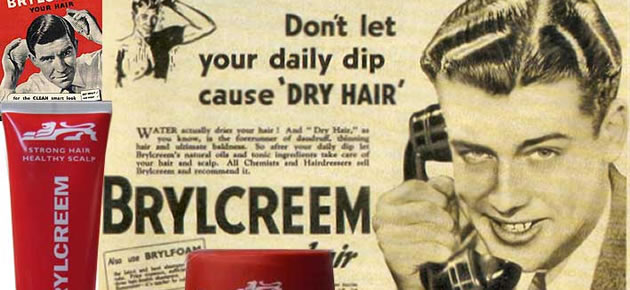
Sam Seder predicted this months ago on the Majority Report and it’s coming true. Trump is great fun for the press. Look at it from their point of view. Would you rather cover Trump or Ted Cruz?  (Cruz makes me feel like his Brylcreem is oozing out of my speakers when he talks)

Watching Rubio makes them thirsty and listening to Jeb Bush makes them sad. But Trump can be treated as both ridiculous AND serious which meets both  tabloids and “Very Serious People” needs in the media.

Come for the Guns Stay for the Racism

I watched the GOP candidates speak at the NRA convention. Trump was energetic, funny and pivoted from “I love the 2nd Amendment” to CURRENCY manipulation in his speech!

It actually wasn’t that big of a stretch. Something for the Minutemen on the border in Texas to get pumped up about then for the real audience, the media, talk about global economic manufacturing and monetary policy.

Trump can say wacky and racist things and the other candidates can distance themselves from him to seem more moderate.
Readers of this site know all this. Insiders know all this. But what I found interesting was actually watching the fake hand wringing about how “Trump is going to damage the Republican Party!” and hurt its brand. Ha! As if.
Thanks to The Odious David Brooks™ you can hear first hand how Trump is saving the party, and how he will help the candidate who gets through to the main election to seem more palatable to the rest of the country. Watch as how Brooks distances himself from Trump‘s comments as well as list the others who did.

As Marc said, the useful thing about what’s happened is that we have seen this fissure in the Republican Party, where Jeb Bush came out very strongly against Trump, saying he takes it personally, Rubio again very strongly.

It has brought them out. It has brought their ire out, a little passion in rebutting Trump. Ted Cruz, a little more disgraceful, more or less saying he raises good issues and things like that. So we have begun to see a split. The party now has to confront this. And I think most of the leading candidates have, to my mind, come out on the right side.

E.J. Dionne called out the other GOP candidates for not distancing themselves from Trump after his racist remarks.

 Brooks gives them cover, “No. It was a matter of days or even hours. They had to formulate things.”

 Exactly, because they did the political equivalent of licking their finger and putting it in the air.

Right then I knew that Trump will stay in long enough to allow all the other candidates to separate themselves from his worst remarks. They can choose how to “formulate” their response depending on who they want to appeal to when.

 At the same time Trump can run long enough to send the dog whistle to the base saying, “Yeah, what he said OUT LOUD was wrong. But you can tell where we really stand by how slowly we denounced him.”

People like Brooks will just point to the denouncements, not the speed or the vehemence of the denouncements. That’s the meta-data that tells you more than just the words.

 Hearing, “We don’t think all Mexican’s are rapists.” from others right away is different from two days later. (BTW, fun word emphasis exercise.  Read the quote above with a different emphasis on each word in turn. Note how the intent of the statement changes each time you read it.)

People joke about “The Clown Car”  of GOP candidates that de-legitimizes the runners. The mainstream media choose to take people who announce seriously (or at least pretend to take them seriously) because if they call Trump a clown and joke, they would get hit by the RW media as having a “liberal bias.”

Therefore we see somber faced Judy Woodruff ask The Odious David Brooks™ how Trump could hurt the party’s brand.

What’s the difference between Donald Trump and Pat Paulsen?

One is a funny guy, saying outrageous and nonsensical things while running a presidential campaign with no chance of winning, the other is Pat Paulsen.

“We Can’t  Stand Pat!”

– Pat Paulsen for President Supporter’s slogan.

Imagine if the media back in the 1960’s took Pat Paulsen serious as a candidate?

He would have kicked serious butt. Look at some of these genius quotes pre-twitter.  On immigration:

I don’t want to say too much about illegal immigration. I’m afraid my views will be reported on the Cinco O’Clock News

and

All the problems we face in the United States today can be traced to an unenlightened immigration policy on the part of the American Indian

He was a head on the drug issue:

  • Marijuana should be licensed and kept out of the hands of teenagers. It’s too good for them.
 He even had thoughts on the rights of criminals and murders that is hot today.
 On the Miranda warning:

  • Why should we tell kidnappers, murderers, and embezzlers their rights? If they don’t know their rights, they shouldn’t be in the business.

Paulsen being dead doesn’t mean we have to take him any less seriously than Donald Trump being alive and orange.

Paulsen’s running would make Marcio Rubio look animated and hydrated. Rick   Perry could distance himself from his health care views. “You think Texas’ health care is bad? Well at least I’m still alive. If you were so smart why are you dead?”

 The Meet the Press discussion, with a propped up corpse of Paulsen, would break just as much ground with “news makers” as Chuck Todd’s interviews with Jeb Bush.

 The MSM media don’t want to call a clown a clown. They love Trump because he’s fun to write about. Even though he has no chance of winning, they get to use him to help other radical RWs seem less bizarrely out of touch.

Also, unlike Trump and other GOP candidates, Paulsen could be honest at the deepest level.

His campaign slogan was sheer elegance in its simplicity.

 “If elected, I will win.” 

Who is this Economic Deity Who Starves Babies? @spockosbrain

Who is this Economic Deity Who Starves Babies?

by Spocko

Today listen, watch and read how people talking about “The Economy”

Bernie Sanders
@SenSanders I applaud the people of Greece for saying NO to more austerity for the poor, children, sick and elderly. pic.twitter.com/hoAwRDy6gl

There will be billions of bits spilled today talking about Greece and “The Economy” it’s nice to see someone put people in the picture.

As my friend  Anat Shenker-Osorio says in her book, “Don’t Buy It: The Trouble with Talking Nonsense about the Economy.

The economy is not a force of nature. It’s not the tide that raises all yachts. It is not like a tidal wave where humans can’t do anything to stop it or change it.

The economy is not a deity who demands we starve our elderly and kill babies in order to be pleased.

Do we humans serve The Deity Economy or does the economy serve humans?
(I’m tempted to quote the Twilight Zone, “It’s a cookbook!” )

It is not a Deity demanding more forced austerity. It’s people making those demands. And it’s not about people tightening their belts more. People have been hanging themselves from those austerity belts,

Do Natural People Have any Power over Corporate People?

In the second episode of Mr. Robot, Elliot the protagonist talks about  “The invisible hand that guides us all.”  He knows how people are being hurt by “Evil Corp” and wants to lash out at the system.  But given the scope of the problem the hero wonders, “What’s the point?”

He has to decide to act or not. And then how far to go.

The hero sees how his actions, or lack of them, will have a direct impact on him and his happiness. Does he ignore the human suffering in front of him or keep ignoring it to keep himself happy?

He might tell himself that he needs the human suffering to happen, “for the greater good,” but he knows it’s really his greater good first.

Will he hurt individuals who are not the guilty parties, in order to fulfill his mission of wiping out debt, and punishing Evil Corp? Is there a guiding principle to his attempts to make change where he keeps the lives of humans foremost?

All This Economy Talk Makes Me Thirsty

Today I walked by the University of Chicago the Booth School of Business the Graham School of Continuing Liberal and Professional Studies.

I also spotted this quote for Kevin Murphy. I know nothing about him except what is on this sign. “Economics is about applying some pretty basic principles to a range of areas and trying to inject a little creativity.”


 I thought that was an interesting comment.  So, to echo Bernie Sanders, I ask, “What are the principles being applied?”

Part of a sense of powerless comes from how the situation is presented to us. If I see the economy as a force of nature or deity then who am I to hold back the ocean? Who am I to defy God?

If you have been fundamentally changed by the economic crisis, as I have been, it’s hard to look at the world the same way. I remember the rage, the fear and the powerlessness.

I see people living their life here in Chicago as if there is a tomorrow and they might have work next week. That’s nice, I’m happy for them.

  But I also remember the long cloud that, though no fault of our own, hung over the economy in our country.  I still felt responsible. Maybe I didn’t worship The Economy right. Or I didn’t batten down my hatches enough. Probably not enough bootstrap pulling on my part.

Yes, I have a bias about who the economy should serve. I put myself in the shoes of the Greek people. I would say I’ve walked a mile in their shoes, but I think they use the metric system over there.

Sanders is reminding us that God didn’t create “The Economy” it was just some men in an office building somewhere. And that means that men and women can change The Economy too. They don’t have to change the laws of nature either. Just the laws of men.

Mr. Robot Will Scratch The Corporate Justice Itch in Your Brain @spockosbrain

Mr. Robot Will Scratch The Corporate Justice Itch in Your Brain  

by Spocko

The pilot of Mr. Robot is the most interesting TV show I’ve seen all year. (Watch it free at USA’s site here)

 It has the potential to become as enlightening (and predictive) about how our current computer-connected corporate power elite function as Person of Interest did when dealing with the ramification of widespread surveillance and the morality (or lack of) in our detection and execution of possible terrorists.

My recap has spoilers, some you could tell from watching the extended trailer. Here’s the marketing blurb.

In MR. ROBOT, Elliot, a cyber-security engineer by day and vigilante hacker by night, is recruited by a mysterious underground group to destroy the firm he’s paid to protect. Elliot must decide how far he’ll go to expose the forces he believes are running (and ruining) the world.

The opening scene takes place in a urban coffee shop. Elliot, the lead character, is describing to the shop’s owner why he ending up finding the 100 terabytes of child pornography the owner had that was serving 400,000 users. We don’t see a single computer screen or keyboard during this, just Elliot and the owner.

 It all started because he liked the fast wi-fi in the shop.

 “It was so good it scratched that part of my mind that doesn’t allow good to exist without conditions.”  -Elliot, Mr. Robot, S01E01

Elliot has a curious mind. “What’s the catch?” he wonders. So he digs. First figuring out what is hinky, then how was it done technically. This is about solving an interesting puzzle, which is a critical thing to understand about many hackers.

Then comes the human puzzle solving side which is more important that people realize. (BTW, in the industry they call lying to people to get the information you want “social engineering” because that sounds like something you go to college to learn. Calling it plain old lying sounds like any shlub could do it. )

His actions, upon finding the porn, reveal part of his moral code. He isn’t going to blackmail the owner. Money doesn’t drive him. He’s going to the police.

The opening scene’s hero/villain morality play was designed to be fairly cut and dried. Serving up child porn is widely condemned as immoral and is illegal. The villain is unrepentant and has few obvious allies. He was caught off guard, was unprepared and didn’t instantly retaliate.  A clear cut win for our hero.

Evil Corp Is Made of People! PEOPLE!

Still, on the subway home Elliot knows he destroyed a man’s life in 3 minutes. That is where he first encounters the mysterious Mr. Robot (Christian Slater) who looks and sounds a bit like a drunk homeless person.

Next we see Elliot at his job in the cyber security firm. (Cyber? Really? 1990’s much?) He has an internal monologue about the company whose computers he defends from external attacks. He calls them Evil Corp. They sound like BofAGoldman MonsantoJPMorganChase and use the Enron crooked E as their logo–nice touch.

At work we meet his childhood friend, Angela, who is the new account manager on Evil Corp, Gideon, the boss and Angela’s boyfriend who also works there.

Angela wants to know why Elliott didn’t come to her party the night before, he says he was working, but the scene cuts to him standing outside the bar afraid to come in.  His social anxiety around other people overwhelms him, even though he clearly has feelings for Angela.

If Your Password is Lame, Do You Deserve Protection?

While Angela and the boss meet to discuss the ongoing computer attacks on Evil Corp, Elliott slips out to see his therapist. It sounds like it is court ordered, which gives us an idea of a back story involving hallucinations.  He describes how he uses his ability to read people to figure out their passwords. No fancy hacking tools, just close observation and understanding human habits.

During the session we learn more about his view of people, “I look for the worst in them.”  But we also learn of  his desire to help and protect the people who have helped or befriended him.

He proceeds to use his knowledge of his therapist’s password to read her email and Facebook posts. She went through a devastating divorce and is now dating “losers” she meets on e-Harmony.  He uses this information to find out that the guy she is currently dating is cheating on his wife. He does this by stalking the therapist, then lying to the guy in person and on the phone.

 Once again, we are given a craven individual Elliott defeats. It’s a fairly clear moral code case, but still it’s creepy.

He can tell himself he’s doing this because he wants to help her. That, “people put all sorts of stuff on Facebook” and “she shouldn’t have such an easily guessable password.” But these are all rationalizations. Doing something “for the greater good” as he sees it, justifies his lying, stalking and threatening

Elliott is called into work by Amanda during a massive late night attack on Evil Corp that is big enough to warrant Gideon and Elliott hopping on the corporate jet and going to the data center.

Elliott saves the day, but there is a mysterious message left for whomever fixed this problem. When he returns he again meets Mr. Robot in the subway who promises answers about the message.  Elliott, curious, decides to go with him to an old building in Coney Island.

Slater explains that Elliott has been selected and introduces him to the gang (A black man! A woman! Yay casting director!) He lays out some of his philosophy and mentions a big project they are all working on.

I’m not sure I buy the story given by Mr. Robot, it has a generic, “Get back at the rich bastards who hurt my family” feeling that appeals to Elliott’s sense of justice.  (Elliott’s own father was harmed by a corporation, but he couldn’t prove it.)

Maybe Mr. Robot, like Elliott, knows how to read people and offers them what they want.  Elliott is painfully lonely and this is a group of like minds he can talk to in real life.  (There is a stunningly shot scene of Elliott huddled in a small space between his bed and the dresser crying about his loneliness.)

Elliott is still not certain he wants to join this crew, so he prepares to turn them in after revisiting the Coney Island site. There he hears more of Mr. Robot’s reasons for doing what he is doing, and his plan. He wants to take down Evil Corp because they own 70% of consumer debt.  If done right the group could erase all people’s debt and mortgages and create “the single biggest incident of wealth redistribution in history.”

 Elliott reminds Mr. Robot of how bad the last financial crisis was and how framing the jerky CTO at Evil Corp won’t accomplish much. Mr. Robot explains:

“You don’t take down a conglomerate by shooting it in the heart, they don’t have hearts. You take them down limb by limb.”

The next day Elliott is at work where Angela is explaining what happened to Evil Corp’s CTO, the FBI and US Cyber Command. Elliott is getting ready to expose the Mr. Robot gang when Evil Corp’s CTO has Angela kicked off the account.  Elliott, upset at how she was treated, changes his mind and provides the FBI and Cyber command with the info that frames Evil Corp’s CTO.

A few weeks go by and still no news of any arrest, meanwhile Angela is distant from Elliott. She explains that she was embarrassed by what happened and doesn’t want to talk about it. In the future he should let her fail, “Even if I’m losing, let me lose, okay?”

This exchange is very important. The character that he wants to protect, doesn’t want the protection. She wants to deal with the situation herself and move on. She doesn’t want the experience taken out of her hands by someone who thinks he knows what is best for her. I’m glad they are showing an important female character doing this.

Mr. Robot sees a huge problem with how wealth is distributed in our country, but it is Elliott’s personal relationship with Angela, who is in debt, that helps him justify a larger action.

Dealing with the big issues reminded me of some of the people who I met and worked with during Occupy Wall Street. So much of that was about first pointing out income inequality.  Think about the phrase: The 99% vs. the 1%. This is an accepted concept now, but it represents a major mental metaphor shift for the country.

However, the mainstream media, used to finding, elevating and then destroying leaders that challenge the status quo was frustrated. They needed individual humans with backstories and motivations to focus on, otherwise it’s too abstract.

With no humans, but an interesting idea, the media asked, “So what are you going to do about it?” This is where the show Mr. Robot picks up. It provides humans and a plan to do something about it.

So, really, what is to be done? Worried about massive student loan debt, and want to stick it to the corporate jerks who hurt your friends? You could blow up the entire system, but are there other alternatives?

One of the post Occupy Wall Street groups that I like is “Rolling Jubilee” They buy debt for pennies on the dollar and then forgive it. That is the kind of lateral thinking and problem solving that should be explored and encouraged. 

As the show ends Elliott is brought into the inner sanctum of the men who “really run the world.”

These people have a powerful world view and the ability to enforce it on entire governments. They can make it seem “right,” and even the best choice, to starve Greek children and crush a generation of students with debt. The only alternate they present if things aren’t done their way is the the world will burn, for everyone.

For dramatic purposes crashing Evil Corp from the inside makes for exciting TV. But the reasons why they would want to do it, as well as alternatives to the status quo, makes it thoughtful.

Following the end of Season 2 of House of Cards my friend Joel and I discussed the importance of  how our nation’s storytellers write about the economy. What models and metaphors do they have in their heads? Ones articulated by Elisabeth Warren, Bernie Sanders or Jamie Dimon? 

I don’t know where the rest of the series is going. They just got renewed for a second season. My hope is that the writer/ creator Sam Esmail* keeps intelligently digging into the characters and ramification of the story line he lays out in the first episode.

*Hey Sam. If you want to talk about the economy for the second season with Bernie Sanders or Elisabeth Warren I can totally set you up, I know people who know people. You don’t even need to hack my email to contact me! I’m spockosbrain at gmail. 

Obama on Maron podcast: The Presidency is sort of middle management @spockosbrain

Obama on Maron podcast. The Presidency is sort of middle management. 

by Spocko

One of the things I love about radio and audio podcasts is that a good conversation or interview can be very enlightening.

President Obama on Marc Maron’s podcast.
 Photos by Pete Sousa

I recommend people listen to this Barack Obama interview by Marc Maron. Here is the link to listen or download.

I got a couple of things from the interview. First, was how Obama sees himself and his Presidency.  The second was his thinking and decision making process. Third was how he goes about trying to implement change.

The hot topic on Twitter about the interview is the use of the n-word by the President.  It was in context and about racism. I’m sure someone has already lost their mind over it, “Why is it okay for him to say it and not me!?” Yadda Yadda, bark bark, woof woof.   Please. Spare me your disingenuous hysterics. 

The end of the interview gave me some hope for the last part of his Presidency, but based on the first part, I’m not expecting something wild, just “a bit better.”

The most interesting insight for me was Maron’s observation at 27:34 that Obama agreed with.  “There is an element of the Presidency that is sort of middle management.”

Obama knows he has power, but he sees the country as this massive ship. If we can turn it 2 degrees in the right direction, that’s progress. Lots of people want a 50 degree turn, and he believes that is not possible. But in 10 years that 2 degrees in the right direction will make a big difference.

The other thing that struck my half-human half-Vulcan mind is that his understanding of what is a fact is really important. He has the Vulcan desire to use reason to make decisions and can’t believe that people, when presented the facts, would decide otherwise.

Compare this method versus people who make up or twist facts to get what they want. Or compare it to people who use emotional arguments to get what they want.  It sounds like he understands that not everyone thinks this way, (but damnit, they should!) and that just giving them the ‘facts’ isn’t enough.

I see this all the time with communications to people by progressives.  “If only they knew the facts!” They are so perplexed when “the truth” doesn’t set people free. They don’t understand why people don’t look at the facts and say, ‘By jove, you are right, I am wrong. I will change my mind from this moment forward.”

Having to deal with messy complex emotions is annoying to logic-based thinkers.  They have to “lower themselves” and “resort” to appealing to emotion. It offends their rational mind that they need to use other methods to communicate and persuade.

When I complained about people having an emotional outburst based on incorrect facts an old friend said, “But Spocko, their feelings are very real to them.”

You need to understand the irrational mind, and what it would mean to them if they changed their minds. There are times when you know you can’t change those minds, so you change the venue, the game or the premise. Or you don’t play in their sandbox and go around them.

I also realized just how important to understanding certain Obama decisions is what was presented as a fact to him. If your economic advisers and Wall Street people come to you with what they call facts, but you don’t have someone there to tell you that their “facts” aren’t really facts but predictions based on assumptions and lies, it’s hard to tell them to do something different.

Wall Street bankers will say, “The facts don’t lie!” yet the people who created those “facts” did lie. Fox News isn’t the only entity that makes up their own facts to fit their narrative.

 Marc asked about where the President is now. It’s part of Maron’s style of comparing his old angry comedian self with the person he is now.

The word that Obama used that stuck out to me was “Fearless.”

I like fearless, it gives me hope.  I doubt he will make a radical change, more like a 2 percent change in the right direction. Where will he apply this fearlessness?

I hope it’s not on the TPP, because as with Wall Street “Economist Experts”, the “facts” he is given about these trade schemes are suspect. The “facts” are coming from the people who will benefit.  Who is in the White House now telling Obama the trade “facts” supplied by the lobbyists aren’t really facts?

Fearless would Obama be saying, “If you lobbyists aren’t afraid of the details, you won’t have a problem with transparency.” That would be a change in the right direction.

Transparency Now! Says former lobbyist @spockosbrain

Transparency Now! Says former lobbyist 

by Spocko

All I know about lobbying I learned from the movie “The American President.” (During which I determined that Mrs. Spocko was more attractive than Annette Bening.)

The movie shows everything people think they know about lobbying: getting the vote count right, educating congress people, making deals, trade offs and pay offs with different groups in exchange for current or future votes, the unusual bed fellows (literally) and finally dealing with the expectations of, and exposure in, the media.

I saw that movie three times, so clearly I’m an expert on what the lobbyists will do next following this current vote on TPP.

Luckily I have some friends who actually were lobbyists and I talk and listen to them to see what really goes on. I wanted to know what they did after a failure and what they think the pro-TPP people will do next.

But first, what do WE do after success? One of my least favorite phrases after a victory or semi-victory is, “Now the hard work begins.” Screw you Negative Nelly! Bite me Pragmatic Patrick! Piss off Realist Rick!

I say, “Give the fighters a pat on the back!  Give ’em a raise.  Take a bow people who worked so hard to educate!”

Then everyone should hug the helpers and friends. Smile and laugh and drink and tell funny stories.  We MUST enjoy and celebrate victories. In the past I didn’t. Post victory I went right into the next project with no down time. Big mistake. My body knew better and usually I’d get the flu.

So now’s the time to look at what worked, what didn’t. What did we do right? What could we do differently next time? How do we build on success? Can we create future barriers for the opposition? What barriers to our success can we bring down now for next time?

I wanted to know, “What do my lobbyists friends do after a losing campaign?

They regroup. Take a break.  Yes they lost, but they still got paid. They explain to the client how this is really a victory. They explain how it sets the stage for the next campaign. They tell the story of how this loss is really an opportunity to change things for success next time, based on what was learned. They just need more money to make it happen.

They determine what the landscape looks like now, then start again.

As we saw from the net neutrality fights, when the people close a door the lobbyists open a window. The second they fail on one front they cry,

“And we would have won too if it wasn’t for those meddling kids!”

Then they look for new ways to win.


We can wait around to see what they will do next, or we can ask former lobbyists, ‘What are they going to do next? What can we do to tie them up now? How can we thwart their future plans? What would YOU suggest? Why would it work? Why is nobody doing this? How would they respond?”

So, taking a page from the actual lobbyists vs. the movie ones, I would like to suggest a specific long-term action to take now.

We need a transparency mechanism for international agreements. Time to set up a bill that would have bi-partisian support on this. Prepare a message for each side based on their biases.

For the right:

With the TPP Obama was going to secretly give away the sovereignty of the UNITED STATES to foreign countries and to un-elected tribunals!!

Let’s never let a President have that kind of power again (esp. if Clinton wins). That power needs to remain in congress (which we will control). Congress needs to know what is going on, especially when it comes to deals with foreign powers (who either want to pay us or kill us.) Why did those horrible hackers at WikiLeaks know something our own Congresspeople didn’t?” 

For the left:

 “The ability of multi-national corporations to hide deals from the government needs to stop, especially when they kill jobs, destroy the environment and taint our food. (Things voters care about)

As a nation we can push for deals that are beneficial for the majority of Americans. If the deals are so great, why don’t the corporations want the public knowing? (Companies are really afraid of pissed off consumers, not bought off congresspeople. This bill forces transparency which gives them no choice but to protect voters.)”

I say transparency because it’s an obvious issue, but I really think the bill should contain more, with transparency just one part of it.

None of the billionaires and their Pet Presidential candidates want transparency, but the people like it. We can ask all the candidates if they are for it (“You won’t be like Clinton and her secret emails will you?”) then watch as their lead billionaires tell them to walk back all that transparency talk.

Maybe get Bernie Sanders, Elisabeth Warren, Alan Grayson and some Clinton hating presidential candidate to put together a transparency bill. One written my our former lobbyists’ friends to make current lobbyists crazy.

It would be a short term tactical move that could capitalize on the temporary bi-partisan agreement. The left congress people are angry at being locked out of the text, the right’s afraid of the future dictator’s secret FEMA camp contracts. It would provide some long term help for the America people against the concentrated power of the billionaires and their need for secrecy.

I’m not in the beltway loop (Ha! Beltloop!) so maybe this in already in the works, or it was suggested and shot down for a million reasons that a stupid non-insider like me wouldn’t understand. That is when I throw down the gauntlet to the insiders and ask. “Okay, you are wiser than a tree full of owls, what CAN we do to make some transparency happen?”

Personally I would get Annette Bening to help push a lobbying/trade transparency bill through. Then when I meet her, I’d tell her that I’ve always thought that Mrs. Spocko was prettier than her. But maybe that would be rude.   

Frankly I’m tired of being the dirty hippie whom, after the fact, everyone says was right, but during the time when it would have made a difference nobody acts to do the right thing or the strategic thing. 

So if pushing for new levels of transparency is the right thing to do, what would it take to make it happen? And if someone is already doing it, what can we do to help?


Now I’m off to watch the beltway’s favorite film starring Annette Bening, The Grifters. 

TPP: the giant puking sound in your house @spockobrain

TPP: The giant puking sound in your house

by Spocko

I’m sure you have all called or contacted your congress person about TPP. But if this passes and the hidden top secret crap that is included happens, it’s going to mean tens of thousands of Americans getting sick from imported seafood and beef. 100’s will die because of agreements to “harmonize” food safety rules.

But by then it will be too late.

We owe a great deal to the people who leaked some TPP text, but they never released the text about food safety changes. How insane is it that even our elected officials have to rely on Wikileaks to know what was in this twisted scheme? That’s messed up.

After I created the video above I made another one focusing on food safety, but didn’t use it because I couldn’t confirm what was in the text regarding food safety. And that is exactly what the the trade negotiators wanted.

Secrecy keeps the Mainstream Media from hammering on deal specifics. They say,”We can only quote from official sources.” meanwhile everything moves forward under cover of corporate darkness.

Early on I contacted someone at Politico covering the TPP to discuss the food safety part of this “trade” scheme. The ag deals sections are huge, including massive sales of antibiotics for animals, something big Pharma loves.  I had some relevant info to give her, but I couldn’t provide any experts to validate the data.  The experts who had seen the data wouldn’t confirm because they could get in trouble.  Dead end.  From the media’s point of view why go to the US Trade Rep for comment when you know they won’t say anything about  “rumors” or “speculation” in the text they won’t let anyone see?

If people knew China could start transshipping food to America via Malaysia and Vietnam with NO USDA or FDA inspections, people would be pissed. These countries have terrible track records for food safety, especially seafood.The slim protections that the USDA and FDA provide on imported food needs to be increased, not removed.

But pissed people aren’t enough in the face of corporate profits. It will take the right number of sick or dead white kids to get people to notice. I don’t want that to happen here. If it does, well I guess the “free market will have spoken” in the form of children with food poisoning screaming in pain and parents shouting at investors who couldn’t stand to have their profits reduced to comply with some silly 19th century food inspection regulations and laws.

NAFTA was a giant sucking sound to the south. TPP might be the giant puking sound in your house.